
great news to wake up to today!
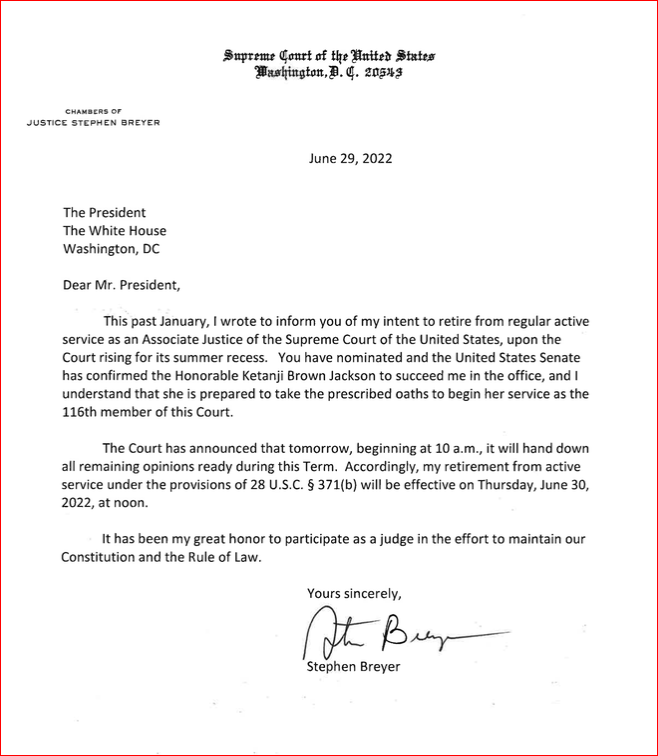
Welcome the Honorable Ketanji Brown Jackson, the first black woman appointed to the Supreme Court. A step in the right direction.


Thank you for reading today's post. Have an InterStellar Day! ~PrP
great news to wake up to today!
Welcome the Honorable Ketanji Brown Jackson, the first black woman appointed to the Supreme Court. A step in the right direction.
Thank you for reading today's post. Have an InterStellar Day! ~PrP







 2011-2026 – This site is registered to PrismPrincess. I own the content of all submissions on my site. If you have any problems with the functioning of the site, or want to make suggestions, I don’t want to hear about them. Just kidding! Please use this link to contact PrP. Have an Interstellar Day!
Did You Know?
Graphite and diamond, despite their radically different appearance and hardness, are both pure carbon—the atoms of carbon are simply arranged in different patterns in the two substances.
Did You Know?
The brand name “Crayola” was created by the wife of the company founder, Alice (Stead) Binney, and is a combination of the French word “craie” (for chalk) and “ola” (from the word oleaginous, which means “rich in, covered with, or producing oil”).
It’s about time a sister made the court.
Whiteboy:
Dude, your pigmentation does not make you special. Here’s a tip. Most black folk do want to integrate and don’t worship you. All black folks want is equal rights and equal protections under the law. You make it sound like white people are something to be admired. Quite the contrary pilgrim…
Did You Know?
Despite the popular misconception that “zillions” is an actual number (often placed in order after trillions), it simply refers (often comedically) to a very large number of indeterminate size.
Whites on the African continent have developed a gas that can kill blacks as they dance. They are setting up to employ its use in places where young blacks congregate in different African countries. If they get away with this in Africa, they will bring it to other countries in Europe and America. They see it as a great way to “thin the niggers out.”
I’m so thrilled for The Honorable Ketanji Brown Jackson. It’s been a long time coming. Huge congratulations. I’m looking forward to seeing her brilliance in the high court.
China has used the technology they stole from apple and other foreign entities to develop an EV battery that will allow a car to drive 620 miles on a single charge. It can charge to 80% in 10 minutes. Tesla, VW, and BMW will be using it. What they don’t know is that China has another EV battery they intend to use on the battle field that will last 1,000 miles and recharge to full compactly in 9 minutes. The US will encounter this battery when Russia uses it against Ukraine. China will be using it to pilot drone aircraft that can do battle with US fighter pilots. The actual pilots will be teenagers sitting in a room. They are skilled gamers.
Some of the batteries that China will ship to Tesla will have hidden chips that will allow China to control them from satellites. If the US uses them in military equipment they will be surprised when they stop working or explode.
That’s a very scary scenario
Package sizes of goods are shrinking.
It’s the inflation you’re not supposed to see.
From toilet paper to yogurt and coffee to corn chips, manufacturers are quietly shrinking package sizes without lowering prices. It’s dubbed “shrinkflation,” and it’s accelerating worldwide.
In the U.S., a small box of Kleenex now has 60 tissues; a few months ago, it had 65. Chobani Flips yogurts have shrunk from 5.3 ounces to 4.5 ounces. In the U.K., Nestle slimmed down its Nescafe Azera Americano coffee tins from 100 grams to 90 grams. In India, a bar of Vim dish soap has shrunk from 155 grams to 135 grams.
Shrinkflation isn’t new. But it proliferates in times of high inflation as companies grapple with rising costs for ingredients, packaging, labor and transportation. Global consumer price inflation was up an estimated 7% in May, a pace that will likely continue through September, according to S&P Global.
“It comes in waves. We happen to be in a tidal wave at the moment because of inflation,” said Edgar Dworsky, a consumer advocate and former assistant attorney general in Massachusetts who has documented shrinkflation on his Consumer World website for decades.
Dworsky began noticing smaller boxes in the cereal aisle last fall, and shrinkflation has ballooned from there. He can cite dozens of examples, from Cottonelle Ultra Clean Care toilet paper, which has shrunk from 340 sheets per roll to 312, to Folgers coffee, which downsized its 51-ounce container to 43.5 ounces but still says it will make up to 400 cups. (Folgers says it’s using a new technology that results in lighter-weight beans.)
Dworsky said shrinkflation appeals to manufacturers because they know customers will notice price increases but won’t keep track of net weights or small details, like the number of sheets on a roll of toilet paper. Companies can also employ tricks to draw attention away from downsizing, like marking smaller packages with bright new labels that draw shoppers’ eyes.
That’s what Fritos did. Bags of Fritos Scoops marked “Party Size” used to be 18 ounces; some are still on sale at a grocery chain in Texas. But almost every other big chain is now advertising “Party Size” Fritos Scoops that are 15.5 ounces — and more expensive.
PepsiCo didn’t respond when asked about Fritos. But it did acknowledge the shrinking of Gatorade bottles. The company recently began phasing out 32-ounce bottles in favor of 28-ounce ones, which are tapered in the middle to make it easier to hold them. The changeover has been in the works for years and isn’t related to the current economic climate, PepsiCo said. But it didn’t respond when asked why the 28-ounce version is more expensive.
Likewise, Kimberly-Clark — which makes both Cottonelle and Kleenex — didn’t respond to requests for comment on the reduced package sizes. Procter & Gamble Co. didn’t respond when asked about Pantene Pro-V Curl Perfection conditioner, which downsized from 12 fluid ounces to 10.4 fluid ounces but still costs $3.99.
Earth’s Best Organic Sunny Day Snack Bars went from eight bars per box to seven, but the price listed at multiple stores remains $3.69. Hain Celestial Group, the brand’s owner, didn’t respond to an email seeking comment.
Some companies are straightforward about the changes. In Japan, snack maker Calbee Inc. announced 10% weight reductions — and 10% price increases — for many of its products in May, including veggie chips and crispy edamame. The company blamed a sharp rise in the cost of raw materials.
Domino’s Pizza announced in January it was shrinking the size of its 10-piece chicken wings to eight pieces for the same $7.99 carryout price. Domino’s cited the rising cost of chicken.
In India, “down-switching” — another term for shrinkflation — is mostly done in rural areas, where people are poorer and more price sensitive, said Byas Anand, head of corporate communications for Dabur India, a consumer care and food business. In cities, companies simply jack up prices.
“My company has been doing it openly for ages,” Anand said.
Some customers who have noticed the downsizing are sharing examples on social media. Others say shrinkflation is causing them to change their shopping habits.
Alex Aspacher does a lot of the grocery shopping and meal planning for his family of four in Haskins, Ohio. He noticed when the one-pound package of sliced Swiss cheese he used to buy shrank to 12 ounces but kept its $9.99 price tag. Now, he hunts for deals or buys a block of cheese and slices it himself.
Aspacher said he knew prices would rise when he started reading about higher wages for grocery workers. But the speed of the change — and the shrinking packages — have surprised him.
“I was prepared for it to a degree, but there hasn’t been a limit to it so far,” Aspacher said. “I hope we find that ceiling pretty soon.”
Sometimes the trend can reverse. As inflation eases, competition might force manufacturers to lower their prices or reintroduce larger packages. But Dworsky says once a product has gotten smaller, it often stays that way.
“Upsizing is kind of rare,” he said.
Hitendra Chaturvedi, a professor of supply chain management at Arizona State University’s W.P. Carey School of Business, said he has no doubt many companies are struggling with labor shortages and higher raw material costs.
But in some cases, companies’ profits — or sales minus the cost of doing business — are also increasing exponentially, and Chaturvedi finds that troubling.
He points to Mondelez International, which took some heat this spring for shrinking the size of its Cadbury Dairy Milk bar in the U.K. without lowering the price. The company’s operating income climbed 21% in 2021, but fell 15% in the first quarter as cost pressures grew. By comparison, PepsiCo’s operating profit climbed 11% in 2021 and 128% in the first quarter.
“I’m not saying they’re profiteering, but it smells like it,” Chaturvedi said. “Are we using supply constraints as a weapon to make more money?”
___
AP Writers Ashok Sharma in Delhi and Kelvin Chan in London contributed.
I’m already noticing it with things I’ve been buying at Whole Foods, for a while now.
Why are we encouraging those aliens that are awol to assist the US? The US is endanger of returning to a kakistocracy, Trump or the republicans take over Congress or the POTUS position. Humans are difficult enough to work with without having go deal with the dumbest among them.
Thank you for teaching me a new word today. Its wonderful.
Drug injection sites:
The California State Assembly approved a bill allowing Los Angeles, Oakland and San Francisco to set up places where opioid users could legally inject drugs in supervised settings, The Associated Press reports.
And, before you go, some good news
By the 1980s, the California condor was on the edge of extinction — just 22 remained.
But thanks to decades of conservation work, the California condor population has rebounded to a couple hundred birds in Central California and Arizona.
Listen to the latest episode of “Short Wave” on NPR to learn more about the yearslong quest to return the birds to their ancestral skies and the importance of condors to the Yurok people — who call them Prey-go-neesh — and the natural world.
If you have a facebook, eh meta account, you need to know this.
Instagram test turns all video posts into Reels
If a user’s account is public, other people will be able to use their Reels for remixes.
In this article: Instagram, news, entertainment, Meta, Facebook, Reels
This illustration picture shows Instagram’s new video feature “Reels” on a smartphone in front of a screen showing an Instagram logo, on August 6, 2020 in Los Angeles. – Instagram on August 5 added a new short-form video feature to the image-focused platform in a direct challenge to TikTok. “Reels” lets users record videos of up to 15 seconds and provides tools for editing, audio and effects, according to the Facebook-owned company.
It looks like Meta truly is making a big push for Reels. Social media consultant Matt Navarra has posted a screenshot on Twitter showing a notice for an experimental Instagram feature that says all video posts would be shared as Reels on the app. If your account is public, that means anyone can discover your video and use your original audio to create their own Reel. Only friends would see your video if your profile is private, but other users can still create a remix with your Reel and download it as part of their remix. The only way to ensure nobody uses your Reel for remixes is to turn the option off in Settings or to disable it for each video you post.
As TechCrunch notes, this move doesn’t come as a surprise when the TikTok-style videos have quickly become a popular format on both Instagram and Facebook. When he revealed the company’s fourth quarterly earnings report for 2021, Mark Zuckerberg said that Reels is now Meta’s fastest growing content format. Meta chief product officer Chris Cox called Reels a “bright point” for the company, as well, in a recent memo shared with employees warning them about “serious times” ahead due to slowing growth. He also said that one of the projects Meta intends to focus on for the second half of 2022 is monetizing Reels as quickly as possible.
Apparently, time spent viewing the short-form videos has more than doubled since last year, with 80 percent of that growth coming from Facebook. That’s why the company will go as far as to redesign Instagram’s and Facebook’s home pages to better incorporate the short videos. Turning all video posts into Reels would give the company more content to circulate, which in turn would translate to more time viewing videos on the platform and bigger potential ad earnings for when the format is finally monetized. That said, not all experimental Instagram features make it to wide release, and it remains to be seen whether this one will survive the testing phase.