I wish everyone a very happy and relaxing Sunday.
And I wish success to G*/4. I appreciate you writing, and for caring.

Thank you for reading today's post. Have an InterStellar Day! ~PrP
I wish everyone a very happy and relaxing Sunday.
And I wish success to G*/4. I appreciate you writing, and for caring.
Thank you for reading today's post. Have an InterStellar Day! ~PrP



 2011-2026 – This site is registered to PrismPrincess. I own the content of all submissions on my site. If you have any problems with the functioning of the site, or want to make suggestions, I don’t want to hear about them. Just kidding! Please use this link to contact PrP. Have an Interstellar Day!
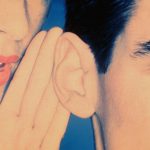
As a Black domestic worker in 1850s California, Mary Ellen Pleasant eavesdropped on her wealthy clients so that she could learn how to invest her money wisely. She later used this knowledge to build a real estate empire — which was worth over $30 million.
Pleasant put her investment profits to good use by purchasing businesses like laundries and boarding houses before building a real-estate portfolio. Before long, she owned shares in other businesses like restaurants, dairies, and a bank.
It’s believed that her white male business partner helped her acquire numerous investments under his name so that she wouldn’t have to encounter as many issues as other aspiring Black businesswomen of the era.
Pleasant soon became one of the wealthiest women in America, and she always tried to use her money for good, first by supporting antislavery causes and then later by fighting against racial discrimination. When it came to standing up for what she believed in, she once famously said, “I’d rather be a corpse than a coward.”
Why is Memoirs of a Geisha controversial?
Both the novel and the film adaption of Memoirs of a Geisha were controversial for a number of reasons. For one, author Arthur Golden interviewed an actual geisha as part of his research, aiming for the greatest possible authenticity. He spoke to her on the promise of complete anonimity — then named her directly as a source, causing her to face serious backlash as her profession is one that demands great secrecy.
Poor lady even faced death threats as a result of being named — the writer had to settle out of court for a reportedly huge sum of money, although the exact amount was never disclosed. She wasn’t even working as a geisha at the time, and had long since retired from the ancient craft. Next, years after the novel was published, a film version was made. The main character was played not by a Japanese actress, but by a Chinese one called Zhang Ziyi.
In fact all the female leads were played by Chinese actresses as opposed to Japanese ones. Which weirded some people out a bit as the subject matter is very deeply related to Japanese culture. Now you had a novel written by an American dude, casting Chinese actresses to portray the story of a Japanese lady who didn’t really want her story told in the first place…
Exploitation. The great white way
A soldier ran up to a nun.
A soldier ran up to a nun. Out of breath he asked, “Please, may I hide under your skirt. I’ll explain later.”
The nun agreed…
A moment later two Military Police ran up and asked, “Sister, have you seen a soldier?”
The nun replied, “He went that way.”
After the MPs ran off, the soldier crawled out from under her skirt and said, “I can’t thank you enough, sister. You see, I don’t want to go to Syria.”
The nun said, “I understand completely.”
The soldier added, “I hope I’m not rude, but you have a great pair of legs!”
The nun replied, “If you had looked a little higher, you would have seen a great pair of balls…. I don’t want to go to Syria either.”
Hi, Charles. Hope you like the blog.
Yes. Thank you so very much! I appreciate your patience, encouragement and assistance.
Do you believe Lyndon Johnson ducked just before JFK was shot and if so why?
Profile photo for Jim Morrison
Jim Morrison
Lived in Washington (1952–2018)Author has 6.1K answers and 19.2M answer viewsUpdated 1y
Originally Answered: Do you believe Lyndon Johnson ducked just before JFK was shot and if so why? https://m.youtube.com/watch?v=OzaQz9vtGg8
According to Senator Yarborough, Johnson was slumped over listening to a walkie-talkie turned down low as the limo left Main Street and turned onto Houston. The further the car progressed, the more LBJ bent down in an attempt to hear better.
Yarborough was on the opposite side of the seat with Lady Bird sandwiched in between. Whatever LBJ was listening to, Yarbrough couldn’t hear it. Lyndon was a tall man, 6 foot 4 inches tall, towering over his wife who was 5 foot 6 inches. Yet, as the assassination neared, LBJ was almost out of view to the spectators, as Lady Bird overlooked him and smiled to the crowd.
What was LBJ listening to that interested him so much as to be perceived almost as to be ducking out of view before the assassination? This question has never been answered.
In the Warren Commission Report, Johnson, when President, gave his side of the story- Agent Youngblood came to cover him from any assassin’s harm. “I was startled by a sharp report or explosion, but I had no time to speculate as to its origin because Agent Youngblood turned in a flash, immediately after the first explosion, hitting me on the shoulder, and shouted to all of us in the back seat to get down. I was pushed down by Agent Youngblood. Almost in the same moment in which he hit or pushed me, he vaulted over the back seat and sat on me. I was bent over under the weight of Agent Youngblood’s body, toward Mrs. Johnson and Senator Yarborough…. “
Senator Yarborough and Johnson weren’t friends, and gave a counter story to Jim Marrs, who wrote “Crossfire: The Plot That Killed Kennedy. “ “It just didn’t happen…. It was a small car, Johnson was a big man, tall. His knees were up against his chin as it was. There was no room for that to happen.” Yarborough recalled that both Johnson and Youngblood ducked down as the shooting began and that Youngblood never left the front seat. Yarborough said Youngblood held a small walkie-talkie over the back of the car’s seat and that he and Johnson both put their ears to the device. He added: “They had it turned down real low. I couldn’t hear what they were listening to.”
Jim Marrs would also quote Dallas Police Officer Billy Joe “B.J” Martin, who was among his fellow motorcycle cops “who were escorting [the Vice-Presidential car] he [LBJ] started ducking down in the car a good 30 or 40 seconds before the first shots were fired…” Martin also commented abouts LBJ lowering his profile almost out of sight moments before the shooting, “our new President is either one jumpy son of a bitch or he knows something he’s not telling about the Kennedy thing.”
Parade photos confirm Vice President Johnson was hunched over severely or ducking, on Houston Street way in advance of the assassination. President Johnson would ask his close friend and former neighbor, FBI Director J Edgar Hoover, if any shots had been fired at him, with Hoover saying ”No”. One could easy conclude that if Johnson was indeed part of the assassination, he was worried that he might have been set up as a target also.
So yes, Johnson wanted to hear what was being said on the radio the SS agent was holding over the back of his seat. Why Johnson had to listen to it so awkwardly remains anybody’s guess. Most people would have held it up to their ear like a normal person.
Now SS agent Youngblood testified at the Warren Commission that he immediately from “Baker” to “Charlie” frequency after the first shot was fired, but we have no proof of this. Actually, it seems the reverse would have been more proper. Baker frequency was for he agents in the motorcade, while “Charlie” frequency was much broader, including links to the motorcade from the Trade Mart, Air Force One and Two, plus a temporary White House Communication Agency Center setup at the Sheraton Hotel in Dallas, which was itself linked directly to the White House.
NOTE: At the same time this Presidential parade is going through Dallas, in Washington, a Senate committee is hearing extraordinary testimony from Don Reynolds, a person who sold a life insurance policy to heart attack victim LBJ. Reynolds stated he saw Bobby Baker with suitcases stuffed with cash, that were to be delivered to Vice President Johnson, for payments on government contract deals.
In other words, Johnson was being exposed for political corruption at the same time as
Did cowboys in the Wild West actually have gunfights in the main streets as depicted in the movies?
The most accurate movie old western gunfight that I know of was in a James Colburn movie, Waterhole number 3. A guy challenges Coburn’s character to a gunfight and goes out to the street. Coburn exits the saloon he is in, walks to his horse and looks at the guy in the street. Standing behind his horse he unlimbers his Rifle, shoots the other guy dead from a distance…from behind the horse…without warning. That’s pretty close to how it worked.
EDIT: One of the things I love about this scene is how matter of factly Coburn’s character takes the shot and how stupid he apparently thinks it is to shoot at each other in the street with revolvers.